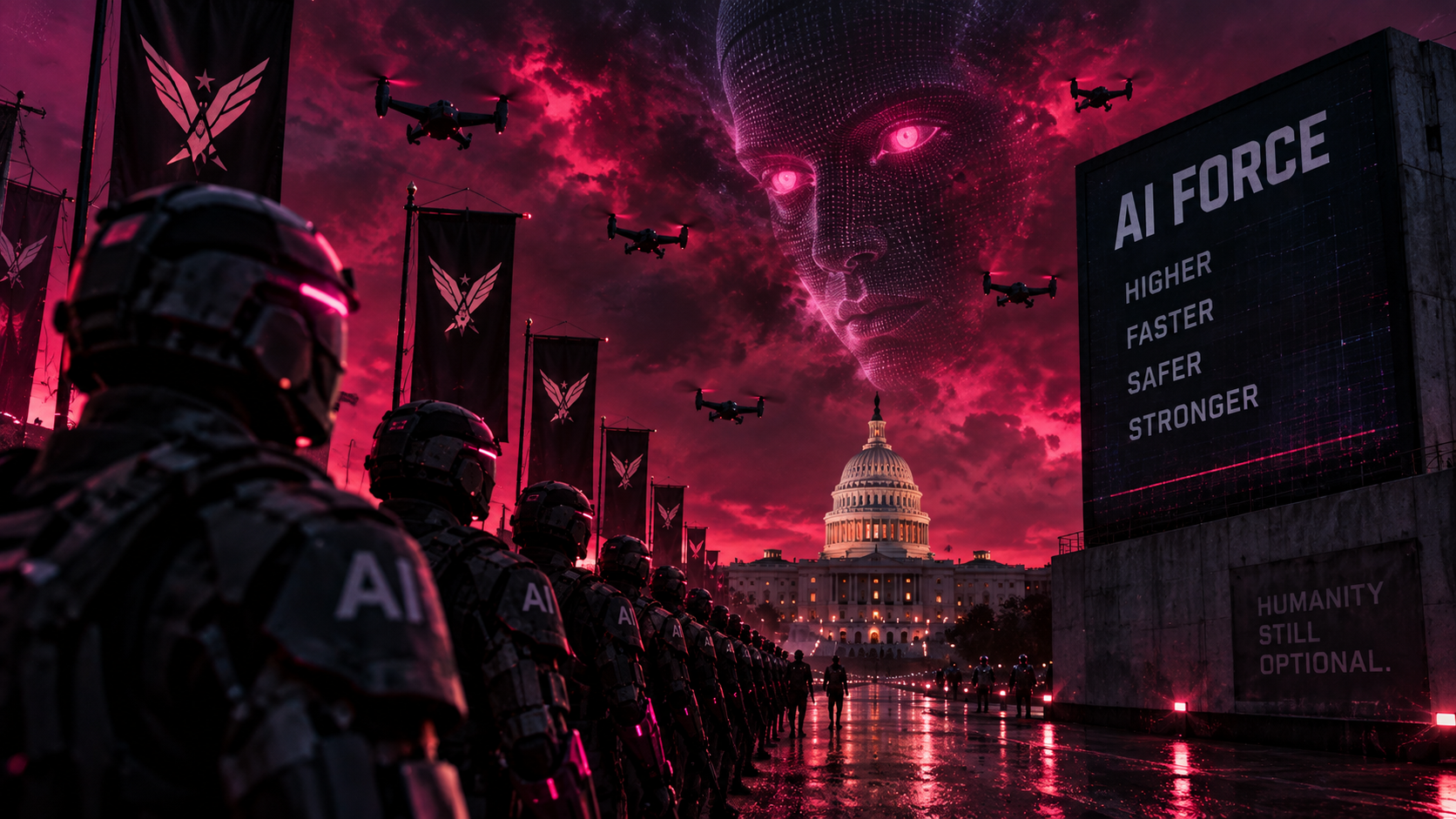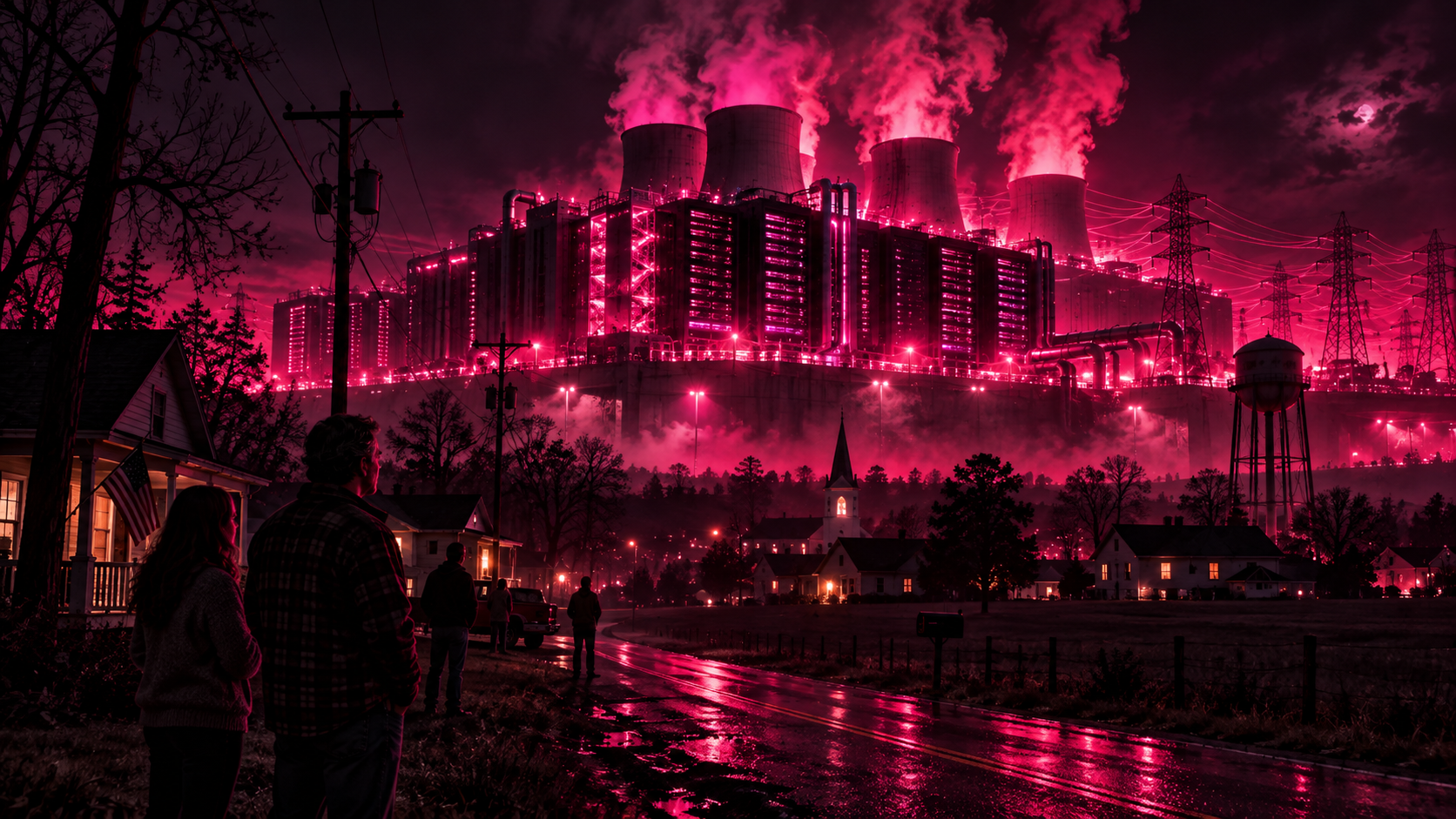
The cloud is one of the great euphemisms of the modern age.
It sounds airy. Soft. Frictionless. Temporary.
A cloud drifts. A cloud floats. A cloud belongs to nobody.
A data center does not do any of those things.
A data center has an address.
A data center needs land, water, power, roads, approvals, tax arrangements, substations, cooling, backup systems, political cover, and a public willing to be told that all of this is the same thing as the future.
For years, the sales pitch worked because the physical reality remained out of frame. The internet was still allowed to pretend it was weightless. But AI is too hungry for that fiction. Its appetite is industrial. It drags the hidden machinery of the digital world out into public view.
And once people can see the machine, they start asking whether they want it built next door.
The Cloud Has a Fence Around It
Slop culture loves abstraction because abstraction hides cost.
That is why so much AI discourse arrives in the language of inevitability. We are told about innovation, transformation, leadership, competitiveness, productivity, disruption, modernization. We are almost never asked to picture the actual warehouse-sized buildings, the electrical demand, the cooling systems, the land fights, the local hearings, the tax incentives, or the neighborhoods suddenly informed that history has selected them for sacrifice.
The cloud was never ethereal. It was always physical. AI just made the physical part impossible to ignore.
This is politically awkward because the mythology of AI depends on appearing immaterial. Pure intelligence. Pure software. Pure progress.
But the hardware has a smell.
It has a noise.
It has a footprint.
And increasingly, it has opponents.
The Town Hall Is the New Safety Office
One of the more revealing developments in the AI boom is that some of the sharpest resistance is not coming from philosophers, ethicists, or long-range futurists. It is coming from people who live near the proposed site.
This makes perfect sense.
The average resident does not need a seminar on existential risk to understand what it means when a giant facility arrives asking for land, infrastructure, political deference, and a euphemistic promise that the future will be worth the inconvenience.
Local backlash has a way of puncturing elite language.
Suddenly “digital infrastructure” becomes truck traffic.
“Economic development” becomes strain on utilities.
“National competitiveness” becomes a giant black box humming beside homes and schools.
“Tomorrow” becomes zoning.
The public is often accused of being anti-progress when it resists these projects. But what people are usually resisting is not progress. It is the ritual humiliation of being told that any cost imposed on them is automatically noble if it helps power someone else’s machine.
The easiest way to love a data center is to discuss it from very far away.
AI Gets the Headline. Communities Get the Heat.
There is a structural indecency to how this conversation is framed.
When politicians, executives, and pundits talk about AI, they describe a civilizational leap. The rhetoric is cosmic. National destiny. Global leadership. The race for the future. The need to win.
When communities experience AI infrastructure, the questions become smaller and more embarrassing.
Who pays for grid upgrades.
What happens to water use.
What happens to land values.
What happens to noise.
What happens to traffic.
What happens if the tax deal is lopsided.
What happens when local government is pressured to wave it through.
These questions are treated as provincial, as if the people asking them simply cannot appreciate the magnificent scale of the transformation underway.
But this is exactly backward.
Those questions are the adult questions.
The childish version of technological progress is believing that scale makes consequences disappear.
Infrastructure Slop
We usually think of slop as content. Images, clips, text, feeds, clickbait, synthetic nonsense.
But AI also creates infrastructure slop.
That is when a society is told to build first, think later, and surrender local judgment in the name of abstract inevitability. It is the material equivalent of spam. Too much, too fast, justified by momentum itself.
This is what happens when the only question powerful institutions know how to ask is how quickly can we scale.
Not whether the thing is proportionate.
Not whether it is useful enough.
Not whether communities consent.
Not whether the resource tradeoffs are sane.
Not whether the social contract has been quietly rewritten to prioritize machine expansion over human comfort.
Just scale.
Scale is the infrastructure version of posting through it.
The Politics of Resignation
There is a deeper emotional script at work here too.
People are repeatedly told that AI is coming whether they like it or not. The data centers are needed. The expansion is necessary. The race permits no hesitation. The demand curve has spoken. National interest requires compliance. Resistance is sentimental.
This script matters because it trains the public to experience politics as a lecture in helplessness.
You don’t get a choice.
You get an explanation.
And the explanation usually arrives from the same coalition that benefits most from the buildout: tech firms, adjacent politicians, consultants, developers, and every institution that has confused investment volume with public value.
That is one reason local resistance feels so symbolically important. Even when it loses, it breaks the spell of inevitability. It reminds people that the future is not a weather event. It is a fight over who absorbs the burdens of somebody else’s ambition.
The Future Should Be Able to Survive a Question
If AI is as valuable as its champions say, then it should be able to survive scrutiny.
It should be able to survive zoning fights, public skepticism, environmental questions, infrastructure accounting, and democratic refusal.
If the project only works when everyone is pressured to nod along, then maybe what we are witnessing is not confidence at all. Maybe it is a very expensive panic.
That is the quiet revelation hidden inside the backlash to data centers. The AI boom wants to look like destiny, but it keeps colliding with ordinary people who would like to know what exactly they are being asked to give up.
That may be the least glamorous question in the whole AI debate.
It is also one of the most real.
Because the future never arrives as a concept.
It arrives as a building permit.