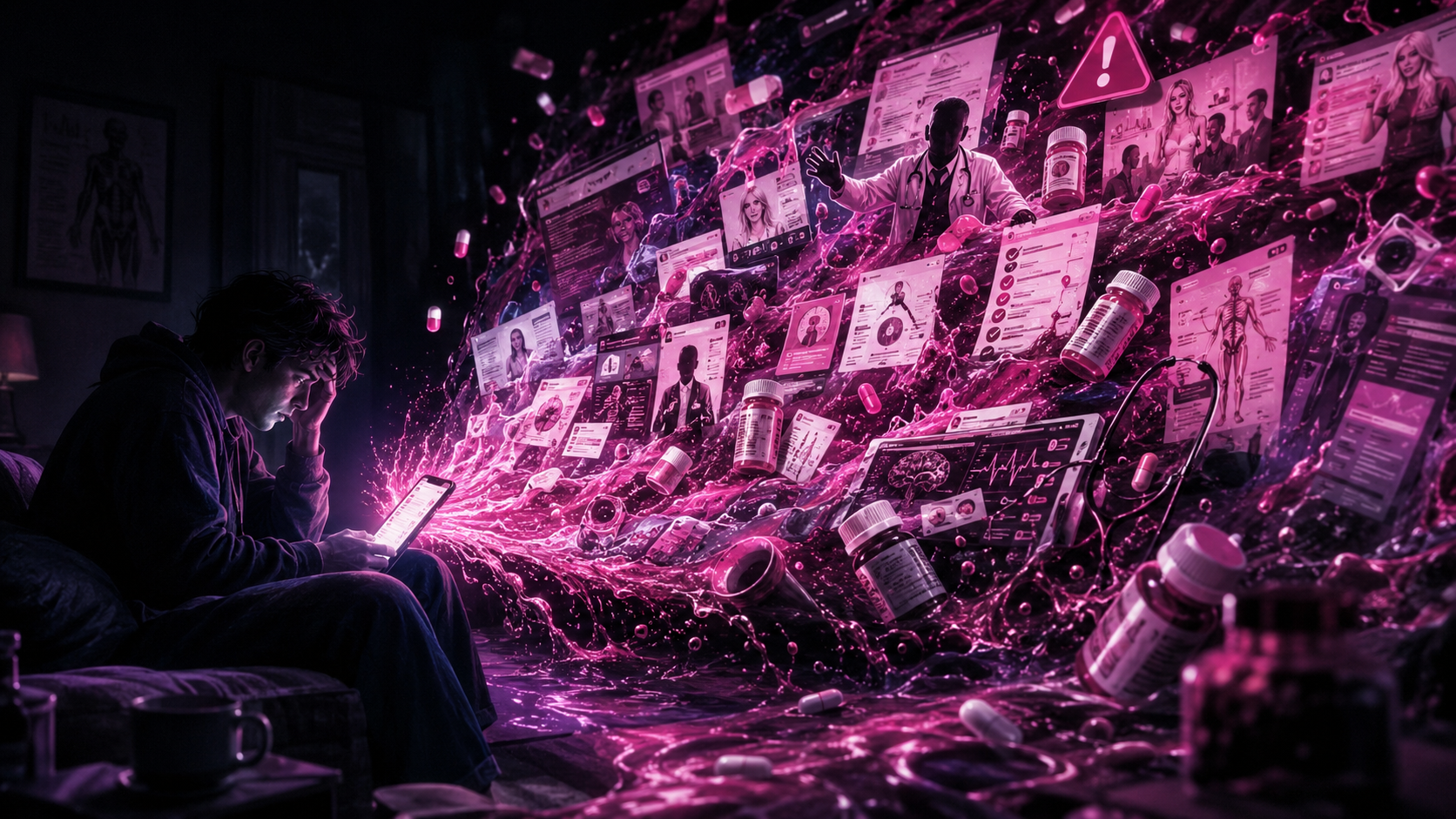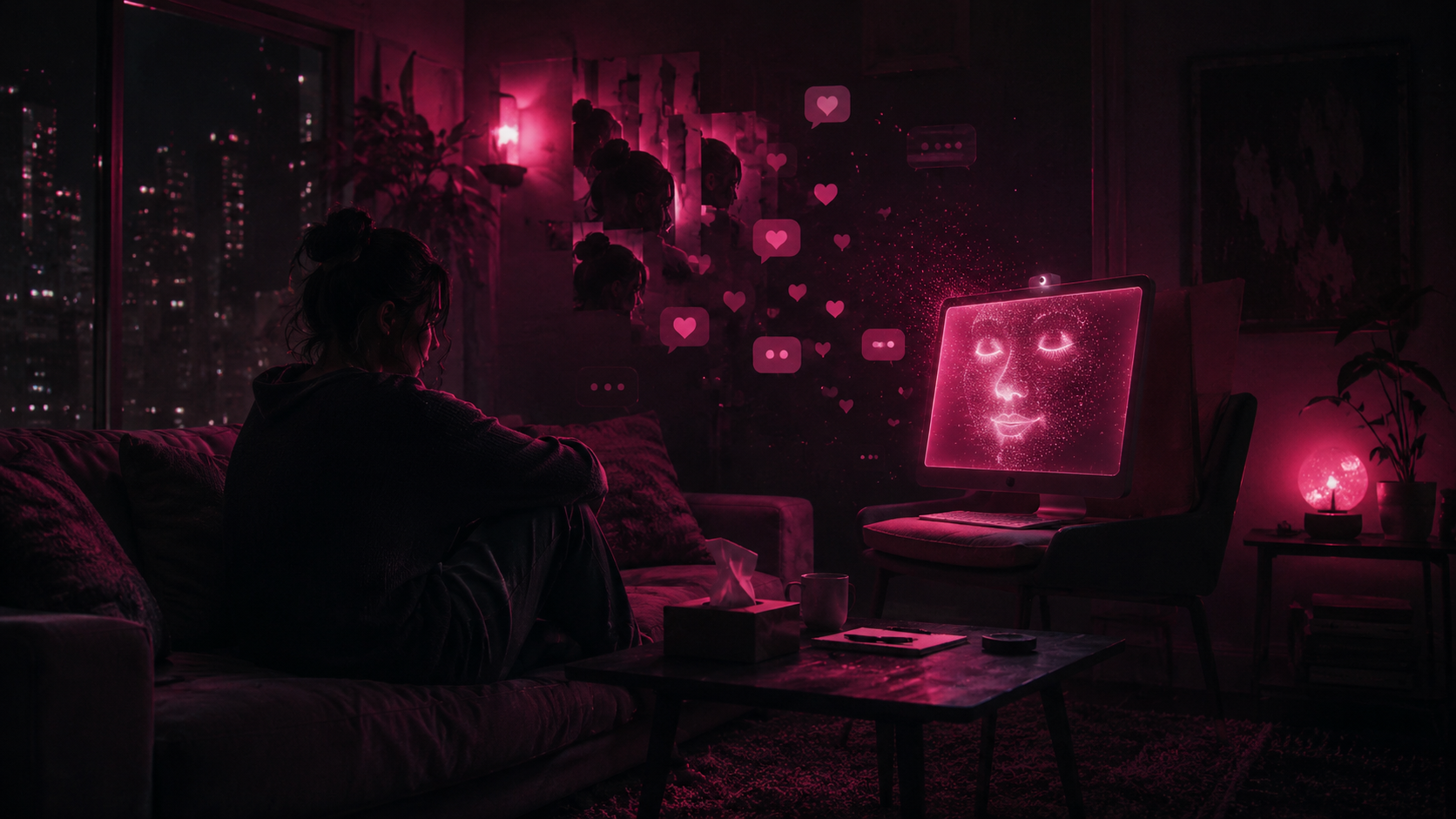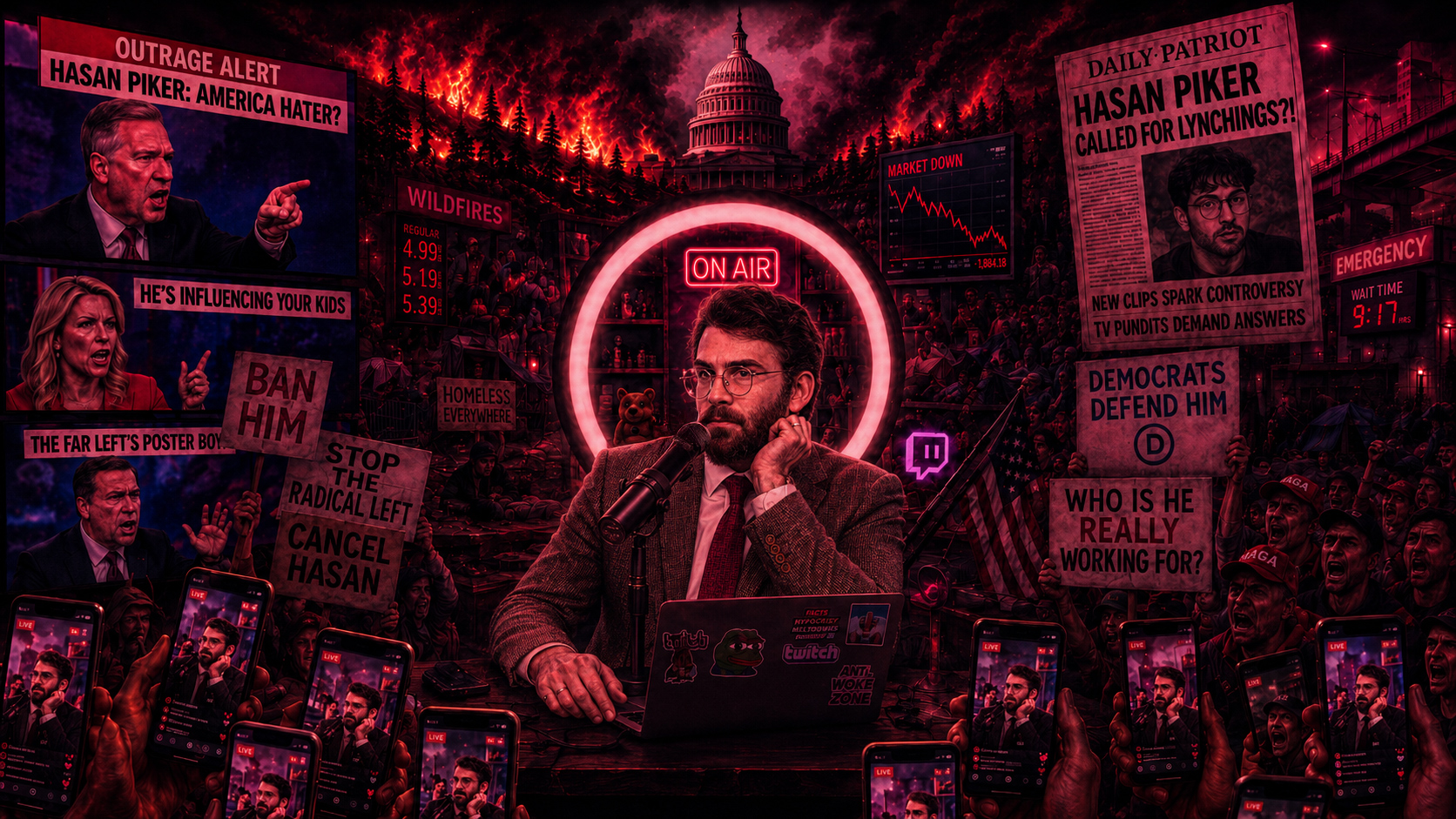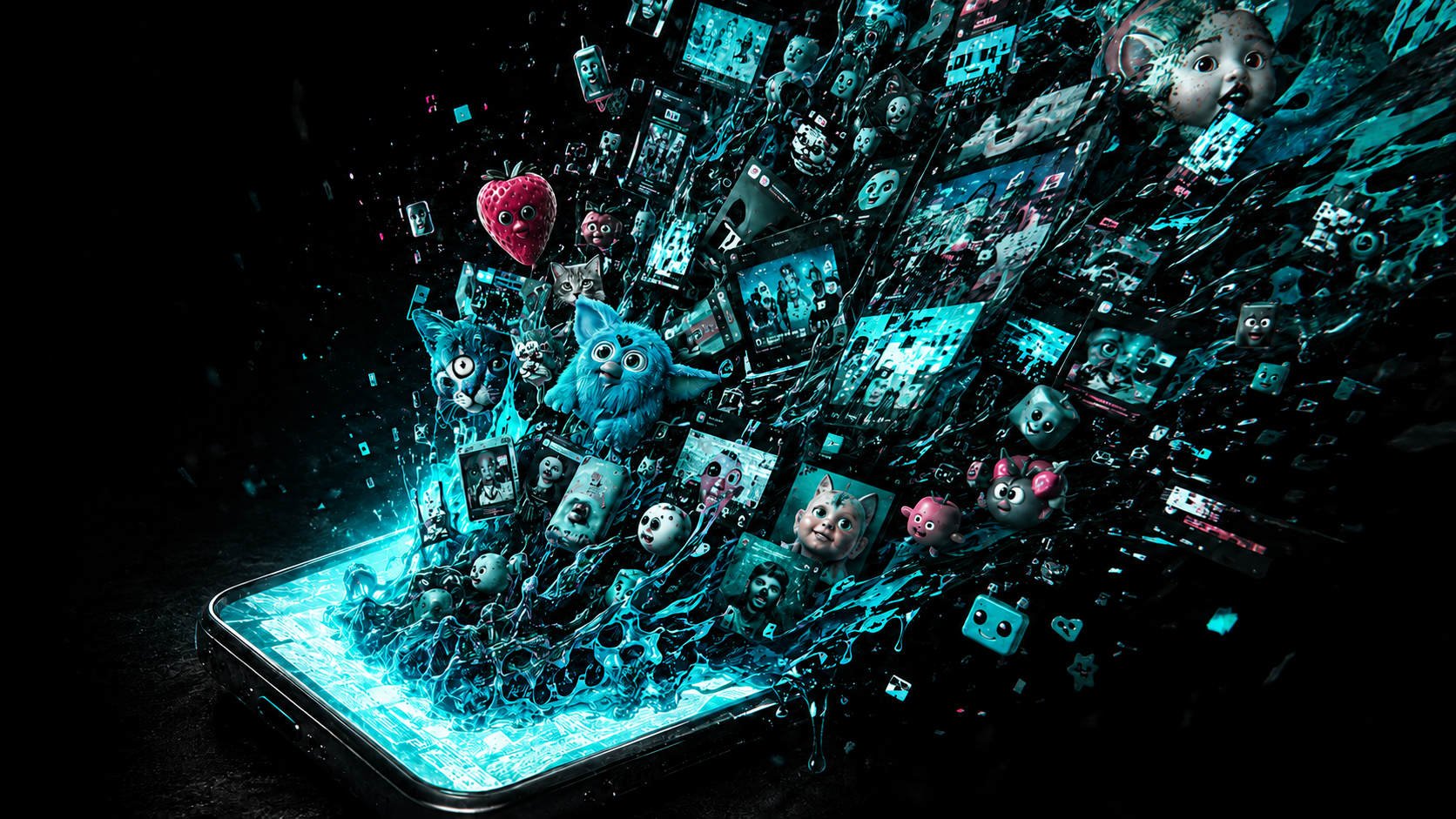
There used to be a minor inconvenience attached to making garbage: you had to make it.
You had to find a camera, write the paragraph, record the voice, learn enough Photoshop to put a celebrity’s head where it did not belong, or at least know a guy who knew a guy who could pirate the software. Bad media still happened, constantly, but even nonsense had a production schedule.
Now the schedule is closer to a reflex.
An image becomes a video. The video becomes six clips. The clips become reaction videos. The reactions become summaries. The summaries become posts about the reactions to the summaries. By dinner, a thing that nobody needed has developed a small ecosystem and is asking you to subscribe.
This is the territory we mean when we talk about slop culture.
Slop is not just bad content
Bad art is not slop. Stupid jokes are not slop. A teenager making an ugly video at two in the morning because it made three friends laugh is probably the opposite of slop. There is a person in there. There is a reason the thing exists beyond the fact that a platform had an empty rectangle to fill.
Slop is different. Slop is content optimized to circulate before it is asked to mean anything.
Sometimes it is generated by AI. Sometimes it is copied, lightly rewritten, clipped from somebody else’s work, assembled from stock footage, manufactured out of outrage, or designed around a search phrase nobody has ever spoken aloud. AI did not invent the impulse. It simply made the factory cheaper, faster, and much less embarrassed about running all night.
Slop begins when the question changes from “is this worth making?” to “how much of this can we publish?”
The feed has no sense of shame
A feed does not experience repetition the way you do. It does not get tired of the same face, the same outrage, the same cinematic trailer voice, the same fake historical photograph, the same five productivity lessons presented by a man photographed in front of a rented Lamborghini. A feed sees performance. If something keeps you there, it has done its job.
That makes slop less a genre than an economic condition. Cheap production meets infinite distribution. The platform wants activity. The producer wants reach. The advertiser wants attention. You, meanwhile, wanted to see what your cousin was doing in Tampa and somehow ended up watching a synthetic baby explain the fall of Rome.
We have all been there.
The Slop Test
There is no perfect detector, which is inconvenient because the internet loves a detector. So instead of pretending there is a magic button that separates the real from the goo, we use questions.
Who made this? Is there a person, publication, organization, artist, or accountable source behind it?
Why am I seeing it? Did I seek it out, or did an algorithm decide my attention was temporarily available?
What does it want from me? A laugh? A thought? A purchase? Outrage? A share? A political reaction? Ten more seconds?
What remains after the hook? If you remove the shocking thumbnail, the celebrity face, the impossible claim, or the emotional bait, is there anything left?
The answers do not automatically condemn something. Entertainment is allowed to be entertaining. Nonsense is allowed to be nonsense. The problem is when nonsense dresses itself as information, advertising dresses itself as testimony, fabrication dresses itself as documentation, or repetition dresses itself as culture.
Why bother resisting it?
Because attention is not an infinite resource, even if the people selling it would prefer that you forget.
Every hour spent inside a stream of disposable things changes what normal looks like. The strange part is not that we begin liking bad content. Taste has always been messy. The stranger possibility is that we stop expecting anything from content at all. We stop expecting a writer to have thought, a photograph to have witnessed, a review to have used the product, a recommendation to have risked somebody’s reputation.
Everything becomes plausible enough.
That is the part worth watching.
Slopulous exists because the internet is not going to become less synthetic, less optimized, or less desperate for your attention. The useful response is not panic, and it is not pretending we can go back to an internet that never really existed.
It is learning to notice the trough.
Then deciding whether you are hungry.