Popularity used to be something marketing tried to create. Now marketing can simply dress up as popularity.
EVERYBODY LOVES THIS SONG.
How do I know?
Because everybody is posting about it.
Who is everybody?
Excellent question.
There is a TikTok account posting the chorus over a breakup video.
Another uses it behind an NBA highlight.
Another says the bridge changed her life.
A meme page has suddenly discovered the band.
A suspiciously enthusiastic account writes:
HOW IS NOBODY TALKING ABOUT THIS???
Thirty-seven people underneath are apparently talking about this.
Spotify recommends it.
YouTube recommends an interview.
Instagram serves a live clip.
By Wednesday you have encountered the song fourteen times.
You finally listen.
Maybe it's good.
Maybe it's great.
Maybe you genuinely love it.
There is just one awkward question:
Did you discover it, or did somebody manufacture the experience of discovering it?
Advertising Used to Have the Decency to Interrupt You
The old advertisement was rude.
I miss that.
Television stops.
Man appears.
BUY FORD.
Thank you, man.
We understand our relationship.
You have Ford.
You would like money.
I have money.
I may or may not want Ford.
Commercial transaction successfully identified.
Modern advertising considers this arrangement primitive.
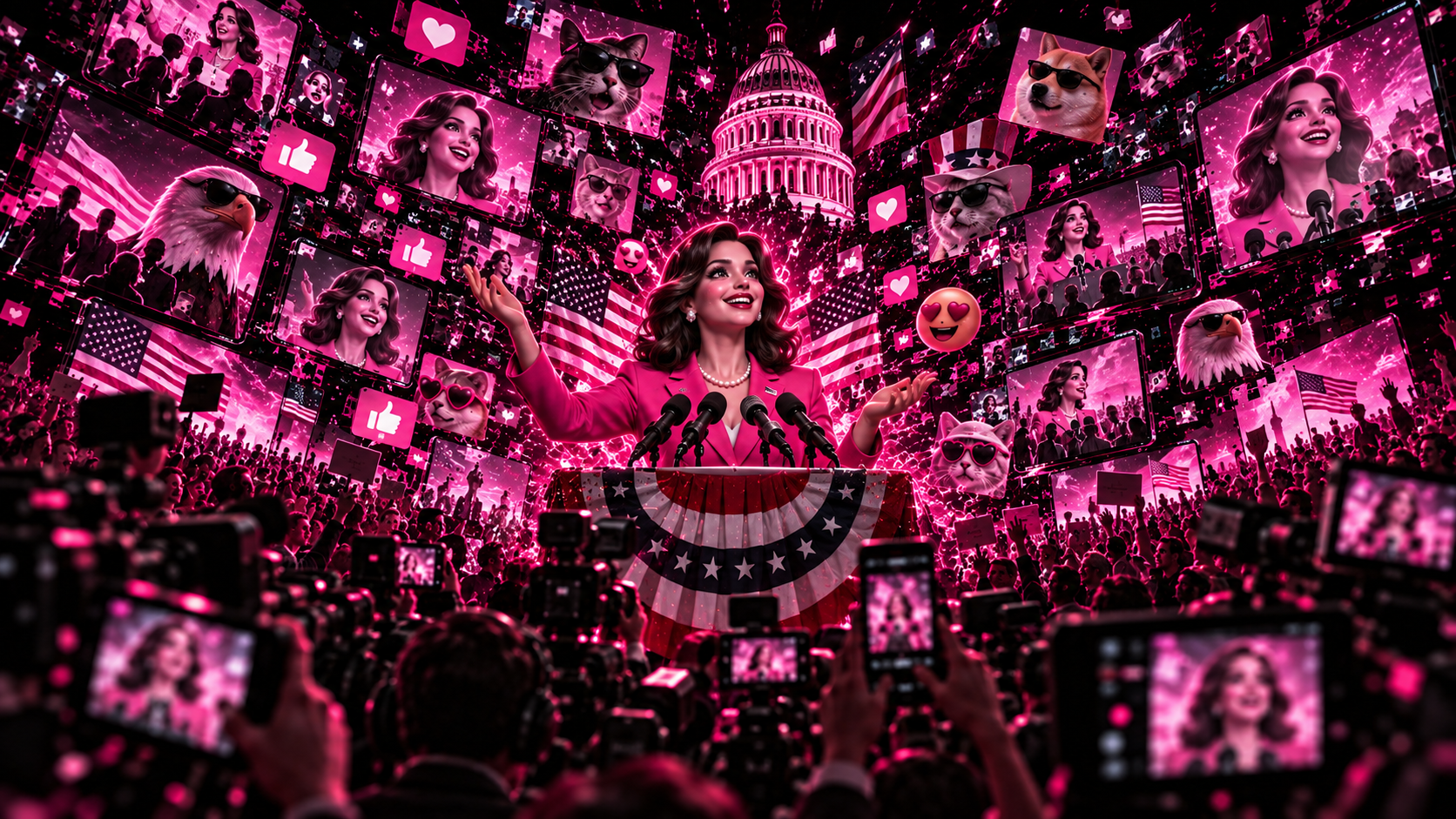
Why interrupt culture when you can impersonate culture?
In March, executives from digital marketing firm Chaotic Good Projects appeared on Billboard's On the Record podcast and openly discussed a technique they call trend simulation.
The basic idea is magnificent.
Study what organic virality looks like.
Then recreate it at scale.
Co-founder Andrew Spelman described posting enough volume across enough accounts to simulate the impression that a song is already moving organically. Billboard's account says the firm studies algorithmic feeds and reproduces successful organic patterns through large networks of content.
Marketing no longer says:
Please like this.
It says:
Look, everyone else already does.
The advertisement has discovered peer pressure.
Then Geese Happened
This became a larger cultural controversy when reporting connected Chaotic Good's techniques to Geese, the Brooklyn rock band whose album Getting Killed had received enormous critical attention.
WIRED reported that Chaotic Good had worked with Geese and described an ecosystem where songs could be seeded across social pages, clips circulated, and surrounding discourse encouraged until recommendation systems began amplifying the apparent momentum. The firm denied using bots or manipulating streaming counts, but its founders were unusually candid about using large numbers of pages to manufacture attention.
Cue internet existential crisis.
I KNEW THEY WERE AN INDUSTRY PLANT.
Except:
Did you?
The band existed before the campaign.
The music existed.
Critics genuinely liked it.
People genuinely became fans.
Marketing occurred.
All of these things can be true simultaneously.
This is exactly why the story is interesting.
Slop does not always replace reality.
Sometimes it surrounds reality until you cannot tell which part happened naturally.
The Song Can Be Great and the Hype Can Be Fake
This is where internet discourse becomes characteristically useless.
Option A:
The band is completely organic and anybody discussing marketing is a conspiracy theorist.
Option B:
Everything about the band is fake and nobody actually likes them.
Human beings apparently cannot hold two objects at once.
Try this:
The song is good.
AND
The marketing campaign attempted to manufacture the appearance of spontaneous enthusiasm.
Look at us.
Advanced reasoning.
TechCrunch made essentially this point after the Geese controversy: marketing musicians is completely ordinary, but newer tactics blur the line between promotion and apparently organic fandom in ways that make audiences suspicious of the whole ecosystem.
The question isn't whether advertising exists.
It is whether you know when you're looking at it.
Organic Is Now a Visual Style
Consider what a traditional ad looks like.
Logo.
Product.
Professional photography.
Call to action.
Corporate account.
Now consider what performs on TikTok.
Person holding phone badly.
Bedroom.
Casual caption.
Imperfect lighting.
Inside joke.
Low-stakes enthusiasm.
The commercial aesthetic says:
We made this.
The native-social aesthetic says:
I found this.
That distinction is incredibly valuable.
The FADER reported in May that labels and marketing teams increasingly use niche creators and social pages in ways that allow promotional material to blend into ordinary feeds. The broader strategy is to make marketing feel indistinguishable from discovery.
This is not influencer marketing exactly.
At least an influencer holding up shampoo while saying:
Thanks to Pantene for sponsoring today's existential breakdown
contains a disclosure.
Trend simulation can be much slipperier.
The product is not necessarily in an advertisement.
The impression of cultural momentum is the advertisement.
Clipping Built the Perfect Delivery System
And then there are clips.
Podcasts.
Livestreams.
Interviews.
Shows.
Long videos.
All chopped into thirty seconds of maximum psychic damage.
Clipping itself is not sinister.
It is editing.
We have done this forever.
Movie trailers are clips.
News highlights are clips.
Your grandmother clipped newspaper articles and mailed them to you even though you repeatedly asked her not to.
What changed is scale.
One nine-hour livestream can become hundreds of short videos distributed through hundreds or thousands of accounts.
The clip acquires a life disconnected from the original audience.
A creator with a relatively modest long-form following can appear absolutely omnipresent because everyone sees the same four explosive moments everywhere.
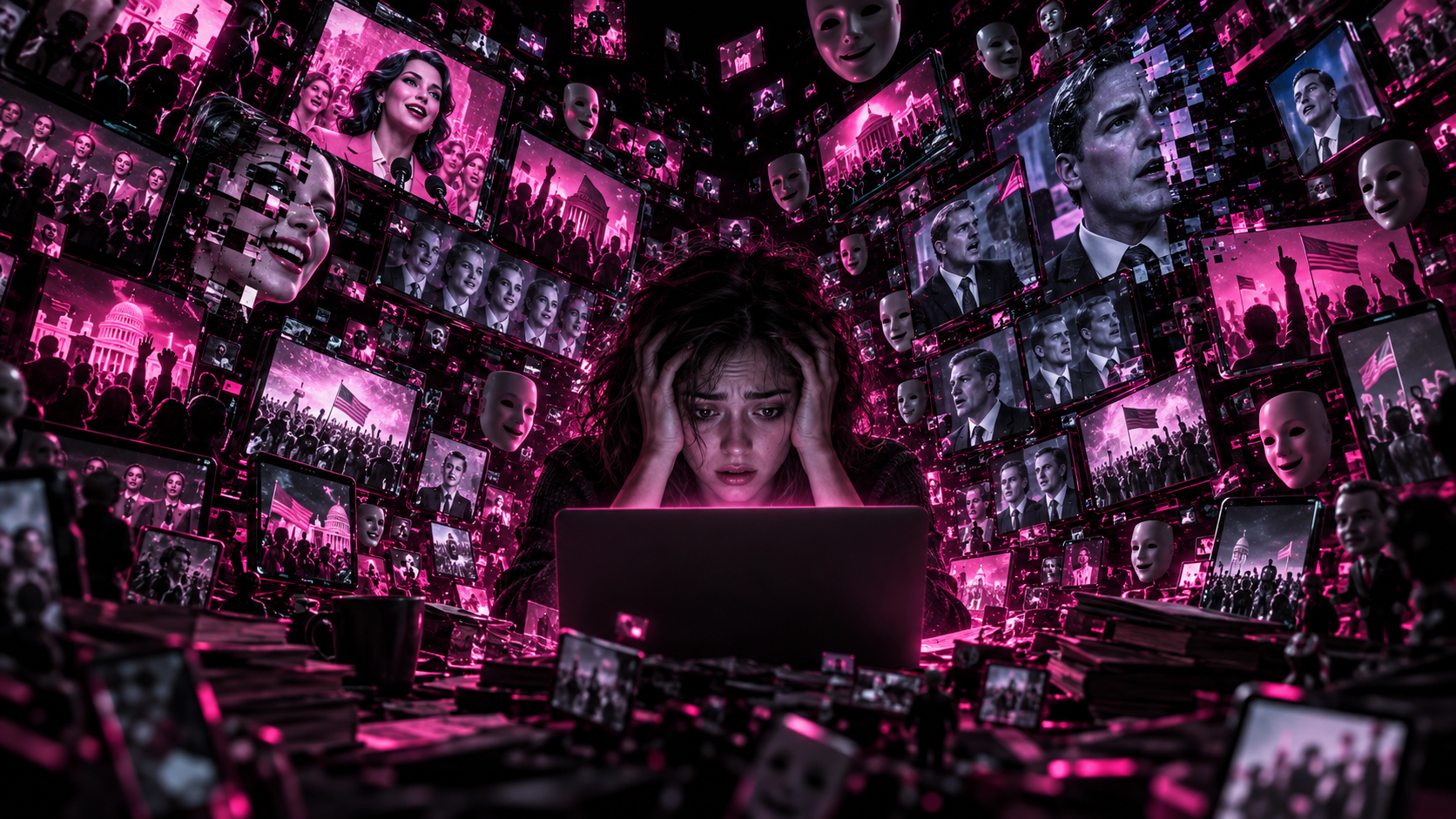
Popularity becomes difficult to measure.
Did ten million people choose to watch this person?
Or did ten million feeds successfully deliver twenty seconds of them?
Those are not the same phenomenon.
The Feed Can Create the Event It Claims to Observe
This is the clever part.
Algorithms notice engagement.
Marketing creates engagement.
Algorithms amplify the content because engagement exists.
Real people encounter the content.
Some engage genuinely.
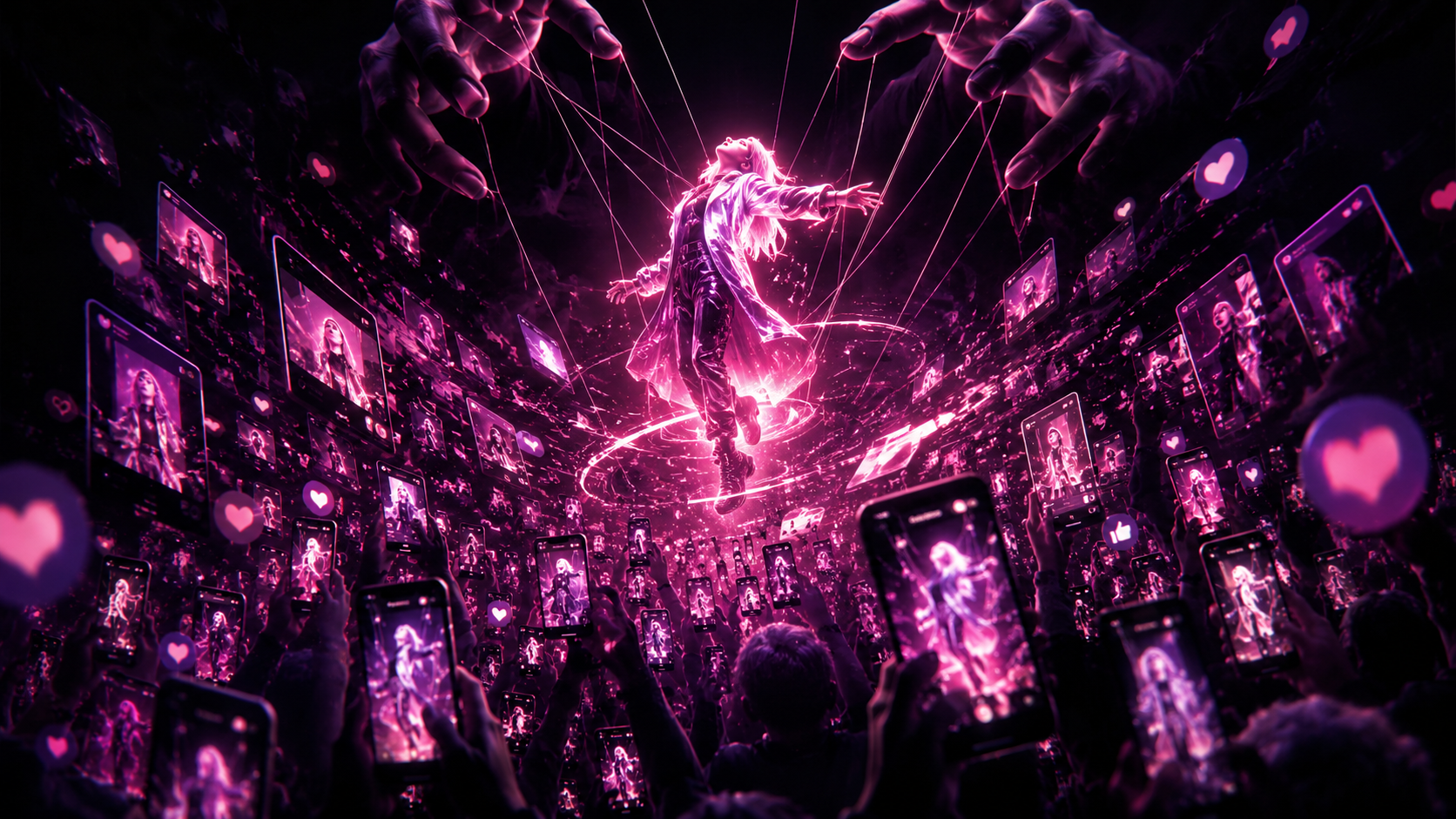
Now the artificial momentum has produced organic momentum.
The fake spark starts a real fire.
At this point, asking whether something is “actually popular” becomes almost metaphysical.
The marketing worked.
People really are talking about it now.
The simulation created the thing it simulated.
Manufactured popularity becomes real popularity the moment enough real people respond to it.
Excellent.
Nothing confusing here.
Payola Got Better Clothes
None of this is historically unprecedented.
Radio had payola.
Labels promoted records.
Studios bought billboards.
Publishers paid for placement.
Hollywood has spent a century telling us what movie opens Friday.
Culture and commerce have always slept in the same bed.
The difference is disclosure.
Everybody knows the billboard was purchased.
Trend simulation borrows the grammar of unpaid enthusiasm.
The Financial Times has connected these tactics to a larger question about whether musical taste itself is being shaped by opaque recommendation systems and campaigns that manufacture social proof.
This is the bit worth caring about.
Not:
Marketing exists! SCANDAL.
But:
Can I still identify marketing when I encounter it?
Suspicion Becomes Its Own Slop
There is another trap waiting.
Once audiences learn that popularity can be simulated, suddenly every successful artist becomes a psyop.
Band you dislike gets famous?
Industry plant.
Movie you hate makes money?
Bots.
Book sells?
TikTok manipulation.
Restaurant has a line?
CIA operation.
This is the same trust corrosion happening elsewhere online.
Learning that some trends are manufactured can mutate into believing all enthusiasm is fake.
That isn't better.
Human beings still like things.
Some things become popular because people enjoy them.
Sometimes the album is just good.
The difficult skill is holding commercial influence and genuine enthusiasm in the same frame.
Taste Requires a Little Friction
Maybe there is a practical response.
Listen to the whole album.
Watch the whole interview.
Find the artist outside the recommendation feed.
Ask how you heard about something.
Pay attention to the difference between:
I keep seeing this
and
I like this.
Those sentences have begun impersonating each other.
They are not synonyms.
The algorithm can produce familiarity.
Marketing can produce visibility.
Neither can ultimately decide whether something moves you.
At least not entirely.
Yet.
The internet spent years measuring popularity.
Now it can manufacture the measurement.
Maybe taste begins by refusing to confuse the two.
Slug: congratulations-your-favorite-thing-is-trending
Category: Culture Slop
Excerpt: Digital marketers can now simulate the appearance of organic virality across social feeds. The song may be real. The fans may be real. The feeling that “everyone is talking about it” may have been purchased.
SEO title: Congratulations, Your Favorite Thing Is Trending | Slopulous
Meta description: Trend simulation uses networks of social accounts, clips and algorithmic tactics to make cultural products appear organically popular. What happens when advertising starts impersonating fandom?