THERE WAS A TIME when a campaign ad had to look like a campaign ad.
A podium. A flag. A grainy shot of a factory. A narrator with the voice of a man who has spent forty years selling pickup trucks and moral seriousness.
Now it can look like a fever dream.
A cartoon villain. A fake surveillance clip. A superhero entrance. A synthetic opponent saying things they never said in a voice they never used.
And the most unsettling part is not that this material exists.
It is that it has become normal enough to travel from novelty to tactic in what feels like five minutes.
Reporting this year has documented AI-generated political ads and deepfake-style creative appearing in races ranging from local contests to statewide campaigns. In Nassau County, Bruce Blakeman defended AI-generated ads in New York’s governor’s race as humorous and satirical, while critics called the material misleading. In North Carolina, WHQR reported on an AI deepfake ad in a state senate race that included a disclosure. And in Los Angeles, AI-heavy videos tied to Spencer Pratt’s mayoral campaign circulated widely online, piling surreal spectacle on top of political messaging.
This is not just negative advertising with newer software.
It is a new production logic.
THE INTERNET DID NOT ENTER POLITICS. POLITICS ENTERED THE INTERNET.
For years, campaigns treated the web as a distribution channel.
You made the ad.
Then you uploaded the ad.
You cut the speech.
Then you posted the clip.
The platform was where the material lived.
Now the platform is where the material learns to behave.
That means campaign messaging increasingly adopts the aesthetics of whatever performs best in algorithmic space: distortion, hyperbole, speed, repetition, visual nonsense, and emotional clarity.
In Missouri, Futurism reported on an AI-generated county-executive attack ad depicting political rivals as conspirators. The same report pointed to similar AI-heavy campaign material in California and Kentucky. The common feature was not ideology so much as style: exaggerated, synthetic, and engineered to seize attention before anyone pauses to ask whether the thing in front of them is real, parody, or something in between.
Slop is what happens when campaign messaging stops asking, “Is this persuasive?” and starts asking, “Will this spread?”
That shift matters because viral logic rewards vividness before accuracy.
A fake-looking image can still do real work.
A ridiculous AI voice can still reinforce a frame.
A knowingly exaggerated ad can still train viewers to think of politics as an endless stream of grotesque caricatures rather than a world of claims that ought to be checked.
SATIRE USED TO REQUIRE AN ARTIST.
This is where the defense gets interesting.
Some candidates using AI-generated political material explicitly call it satire.
And satire is obviously not new.
Political cartoons have been turning presidents into donkeys, elephants, emperors, babies, devils, clowns, and assorted farm animals for centuries.
The difference is not simply that AI can make parody.
The difference is that synthetic media can imitate the visual language of reality while behaving like caricature.
That is a stranger object.
In the North Carolina example, the ad’s creator argued that its fakeness was obvious and included a disclosure. The opposing candidate still described seeing her likeness manipulated in the ad as disturbing. WHQR’s reporting captures the tension neatly: the content may function as obvious satire to one viewer while the ability to make a recognizable person move and speak artificially can feel categorically different to another.
This is why “it’s obviously fake” is not quite the end of the conversation.
The technology is improving.
The obviousness may not survive.
THE CHEAPNESS IS THE STORY.
Not because cheap things are always bad.
Because cheap production changes what becomes thinkable.
If a traditional attack ad costs money, planning, staff, outside production, and time, you make fewer of them.
If a synthetic attack ad can be created rapidly and distributed widely, the threshold drops.
The campaign can produce more experiments.
Supporters can produce more experiments.
PACs can produce more experiments.
Random accounts can produce more experiments.
Eventually the political media environment becomes less like a campaign and more like a content ecosystem.
That is already visible in the Spencer Pratt example. Washington Monthly reported that many of the most-viewed pro-Pratt AI videos were produced outside the campaign, though some were amplified through Pratt’s own social account. The distinction between official campaign communication and supporter-made spectacle starts getting fuzzy very quickly when both travel through the same feed.
The candidate is becoming one asset among many.
THE MEME DOES NOT CARE WHO PAID FOR THE CAMERA.
Traditional campaign regulation is built around identifiable actors.
Campaign.
PAC.
Party.
Candidate.
Broadcaster.
Publisher.
Internet-native political media is messier.
A supporter makes a video.
A campaign shares it.
An influencer remixes it.
A clip account reposts it.
A partisan meme page strips the context.
Somebody downloads it and uploads it somewhere else.
Now ask the normal questions.
Who made this?
Who paid for it?
Who approved it?
Who is responsible for the version I am actually seeing?
This is where disclosure becomes harder than simply putting a line of text at the end of a commercial.
The object keeps moving.
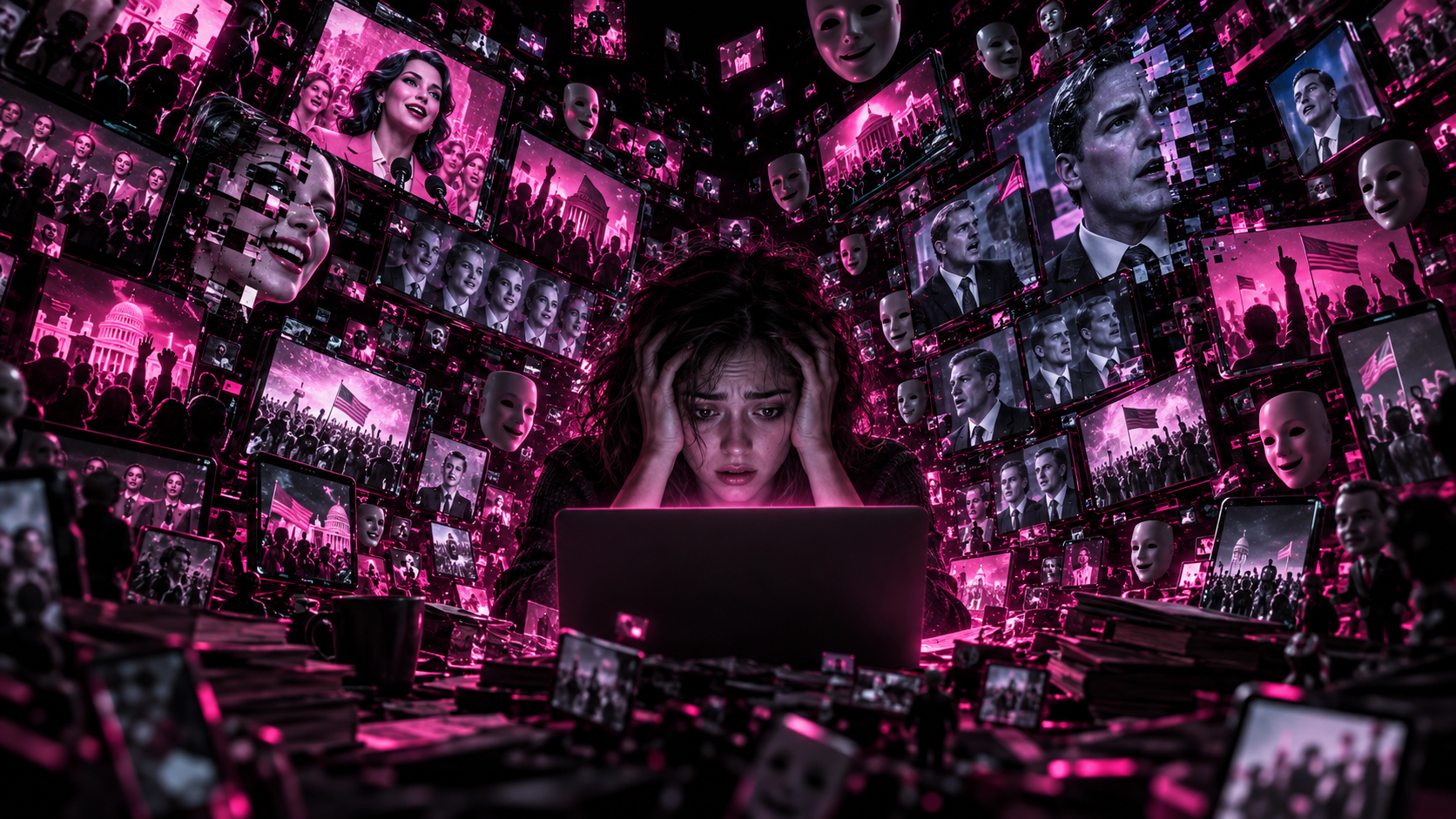
WHEN EVERYTHING LOOKS EDITABLE, EVERYTHING STARTS FEELING PROVISIONAL.
Campaign slop also changes the emotional texture of politics.
You stop feeling like you are looking at persuasion.
You start feeling like you are looking at content.
Disposable content.
Replaceable content.
Content that can be regenerated with another candidate, another city, another villain, another voice.
In that environment, authenticity becomes less a standard than a costume.
The candidate is real.
The image may not be.
The voice may not be.
The location may not be.
The scene definitely may not be.
The emotional message survives anyway.
ABC7’s reporting on the New York governor’s race showed this divide clearly: Blakeman described his AI-generated material as satire, while some voters interviewed by the station said it felt misleading because it could make people think a candidate had said or believed something they had not.
DEEPFAKES ARE ONE TOOL. SLOP IS THE ATMOSPHERE.
The phrase “deepfake politics” makes the problem sound like one bad technology.
A fake video.
A cloned voice.
A manipulated photograph.
Find the fake.
Label it.
Problem solved.
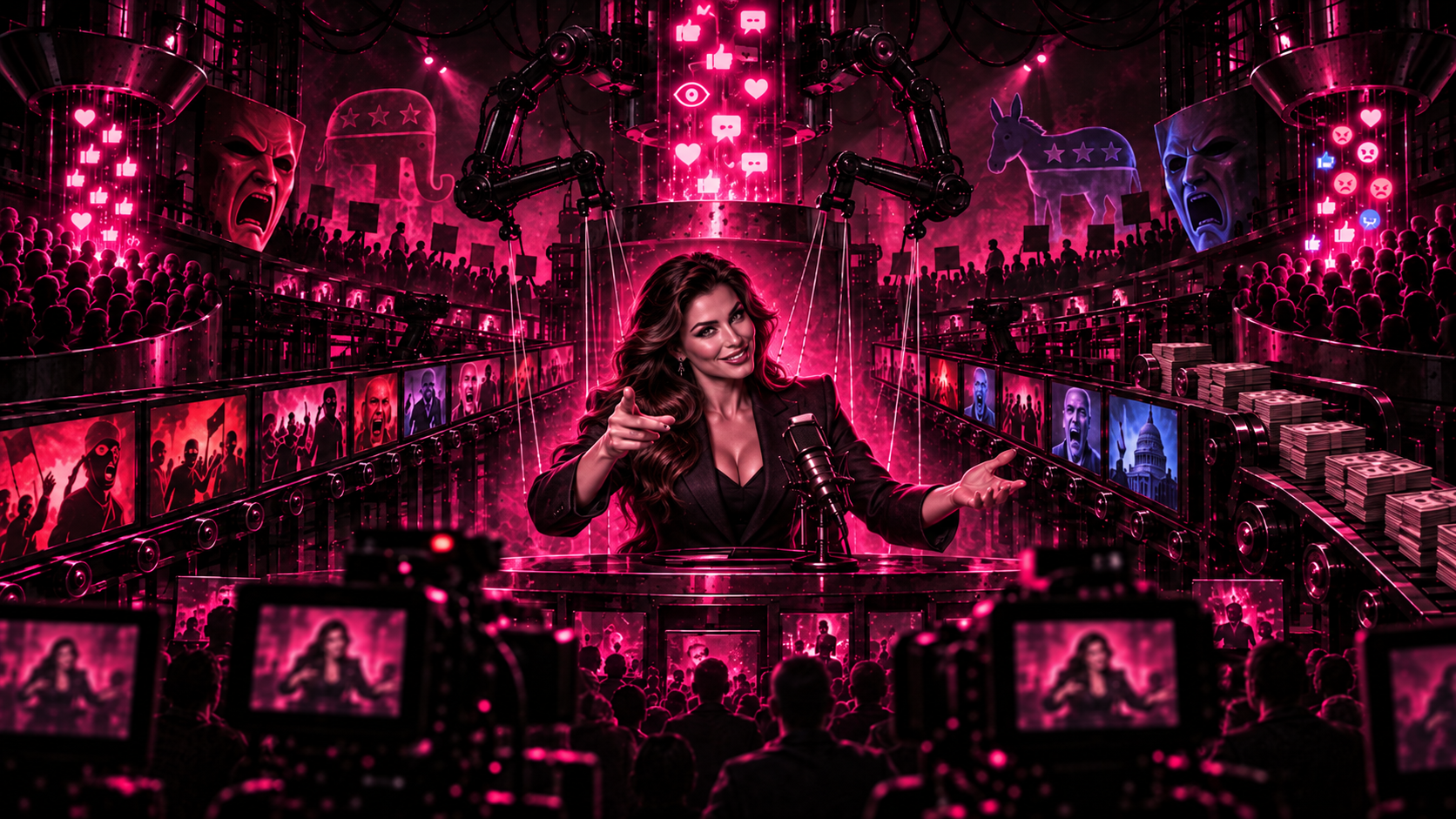
Campaign slop is broader.
It is the combination of cheap generation, fast distribution, meme aesthetics, algorithmic reward, ambiguous authorship, and political incentives.
That system can produce obvious jokes.
It can produce misleading material.
It can produce harmless parody.
It can produce ugly propaganda.
It can produce something so ridiculous that nobody believes it literally and still succeeds because literal belief was never the objective.
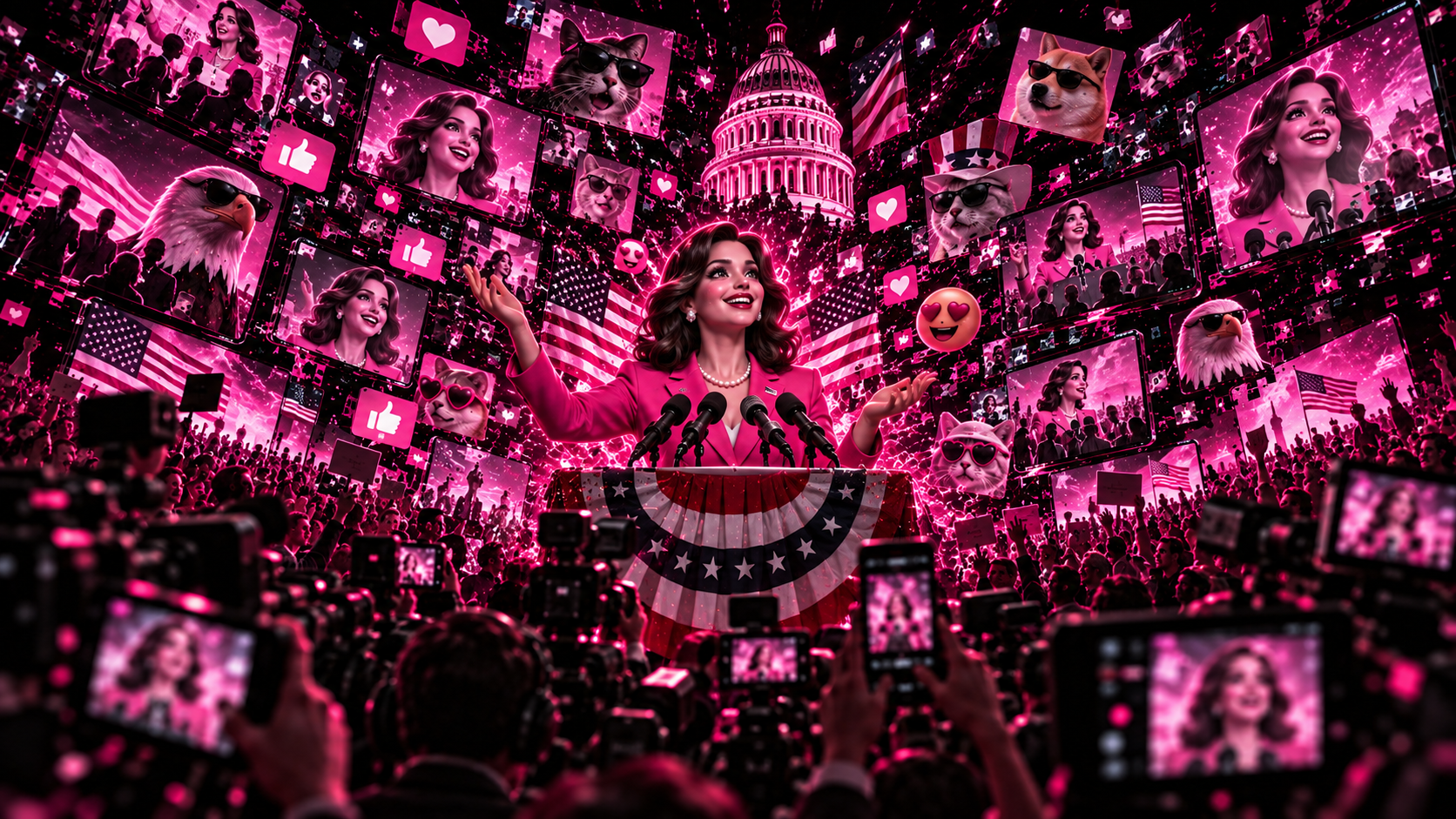
The campaign ad has started cosplaying as a meme because the campaign finally understood something the rest of the internet learned years ago:
You do not always need people to believe the content.
Sometimes you only need them to stop scrolling.